Off-Grid Solar Systems in Cabo: The Complete 2026 Guide
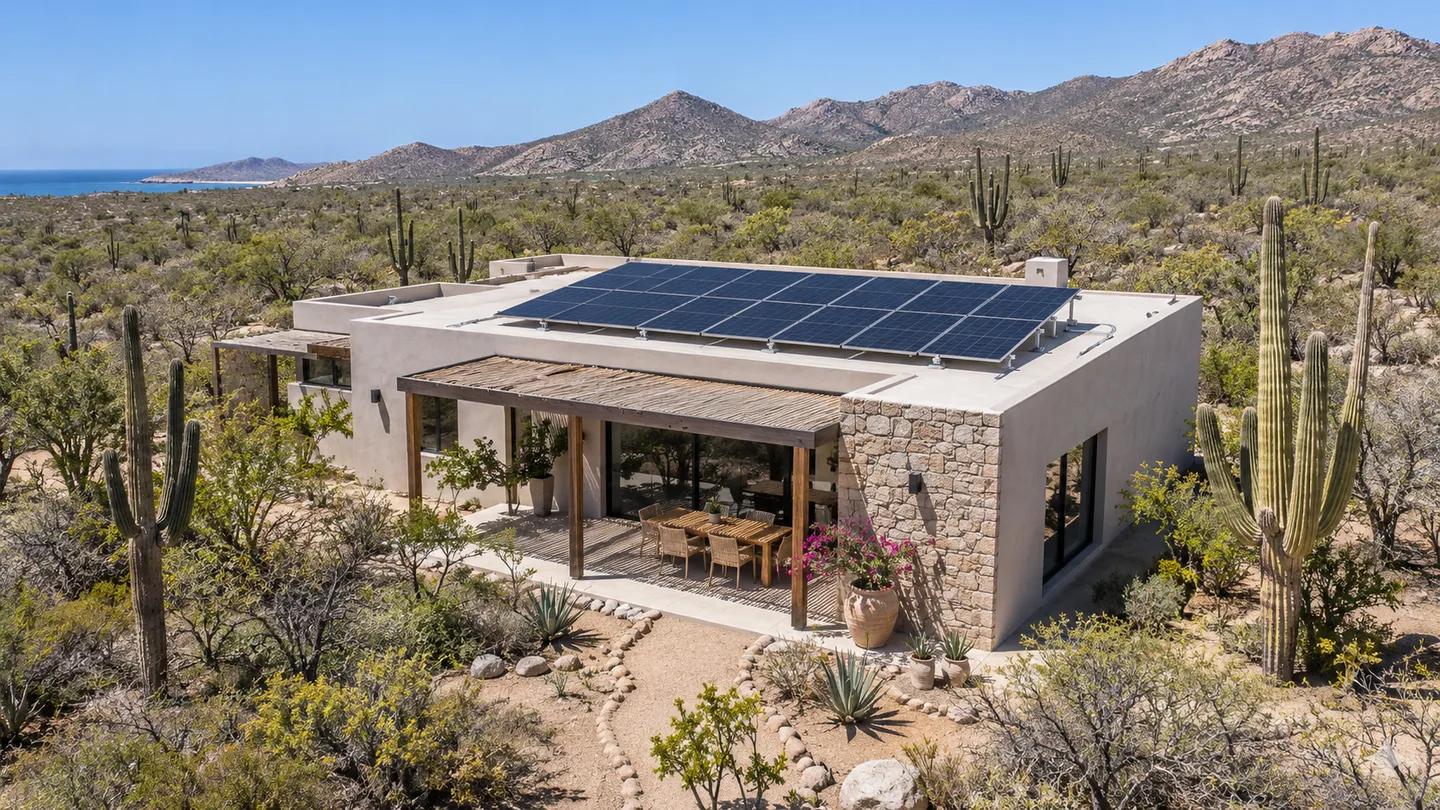
Across Los Cabos, more homes, ranches and developments are choosing to live without CFE. Sometimes it is a necessity —the nearest power line is miles away— and sometimes it is a choice: frequent blackouts, saturated transformers or hurricane season. This guide explains how off-grid solar works in Baja California Sur and what to check before you invest.
What is an off-grid solar system?
An off-grid (stand-alone) solar system is a power plant that is not connected to the utility grid. Panels produce energy during the day, part of it is used immediately and the surplus is stored in batteries for the night and cloudy days. Your property becomes its own power company.
Components of an off-grid system in Cabo
- High-efficiency monocrystalline solar panels (550–620 W) rated for salt-mist environments.
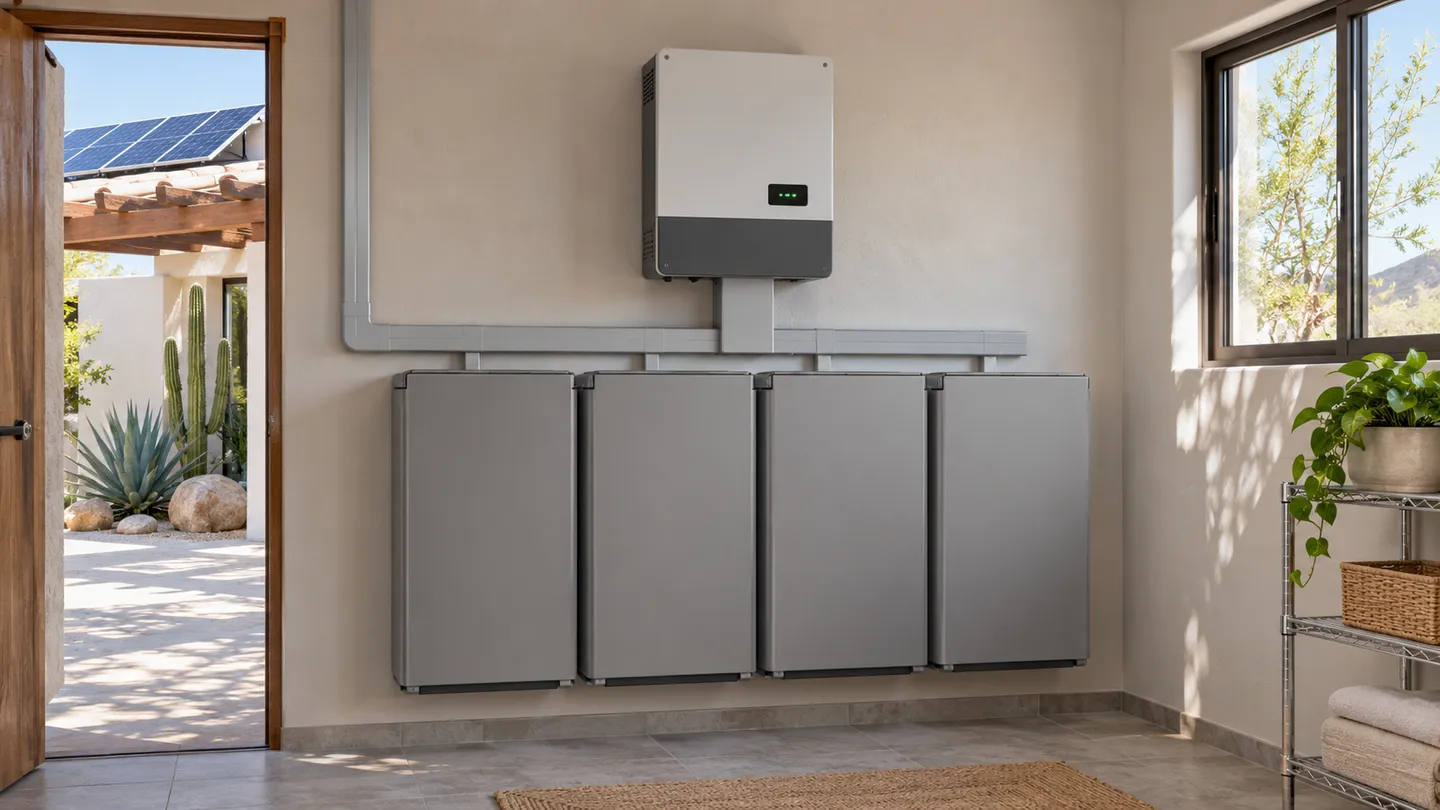
- An off-grid or hybrid inverter-charger (e.g. Sol-Ark) that delivers 120/240 V and manages batteries and generator.
- A LiFePO4 lithium battery bank: the heart of the system, it defines how many hours or days of autonomy you get.
- Racking engineered for hurricane wind loads, with stainless steel or anodized aluminum hardware.
- Electrical protection, grounding and lightning protection for thunderstorm season.
- An optional backup generator (propane or diesel) that starts automatically only when batteries drop below a set point.
- Remote monitoring so you can check production, consumption and battery state from your phone, even from the US or Canada.
When does off-grid solar make sense in Cabo?
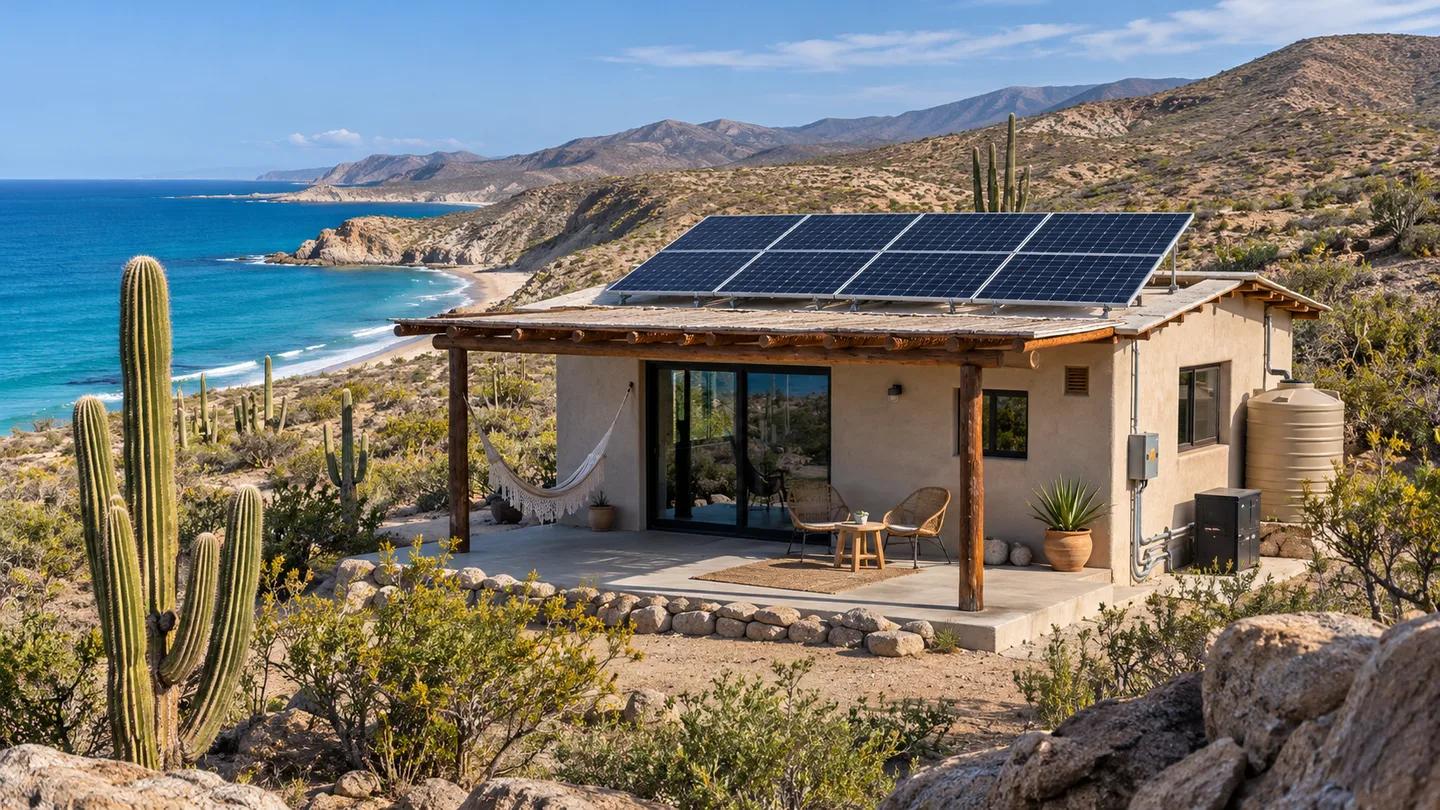
- Properties without CFE service: East Cape, Cabo Pulmo, parts of Todos Santos, El Pescadero, La Ventana or ranches in the sierra.
- Lots where extending the grid costs more than the solar plant itself, or takes months to approve.
- Luxury homes that cannot lose air conditioning, water pumps or security during a blackout.
- Owners who want full independence and predictable energy costs for 20–25 years.
How it is designed: load, sun and autonomy
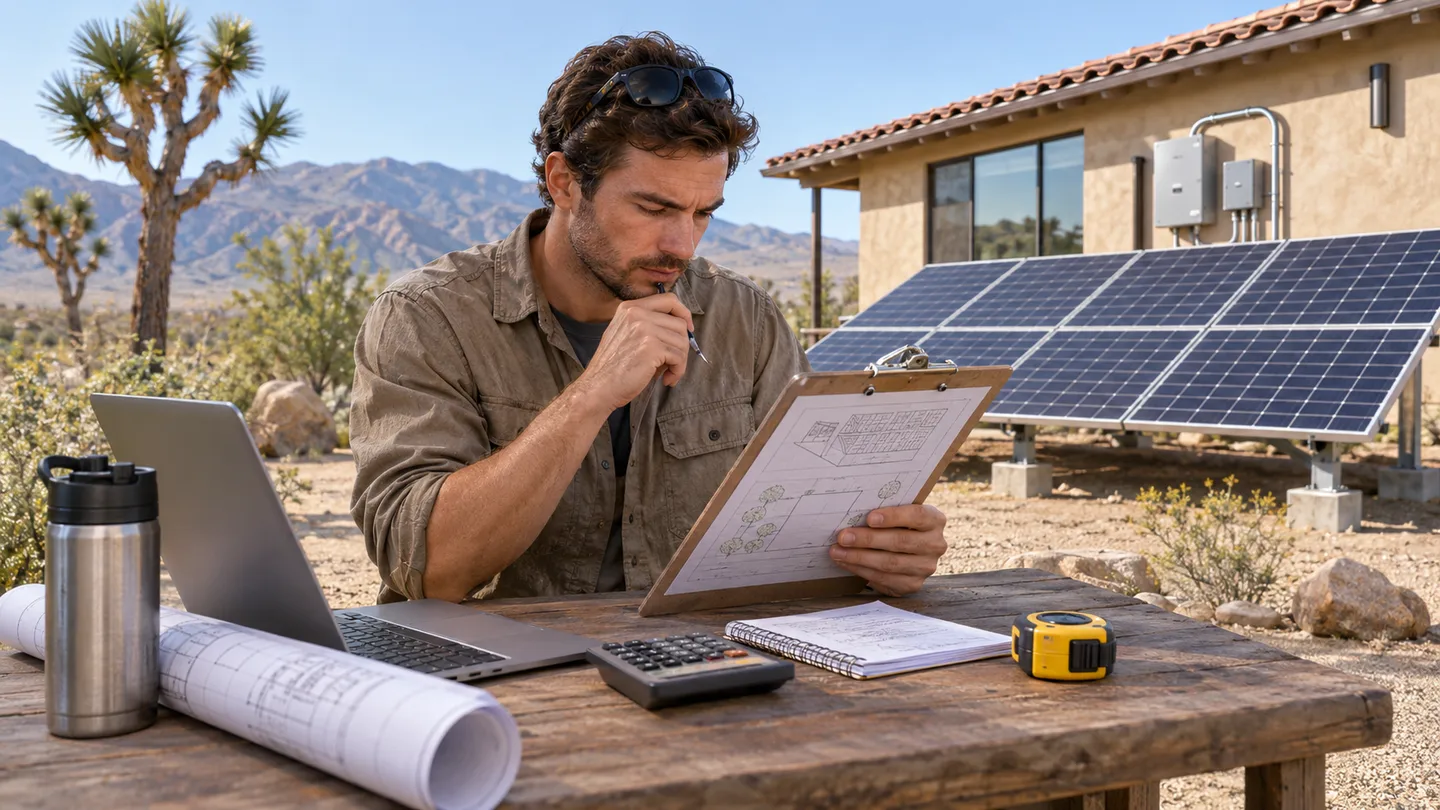
Good off-grid design starts with real consumption, not with a panel count. We calculate the daily energy (kWh/day) of every load —mini-splits, pool pump, refrigerators, lighting, water pumps— and the peak simultaneous power. That defines three things: inverter power, battery capacity and solar array size.
Los Cabos has some of the best solar resource in Mexico, typically 5.5 to 6.5 peak sun hours per day depending on the season. That allows compact arrays, but design must account for cloudy days in the rainy season and extreme summer heat, which reduces panel and battery performance. Learn how to calculate your bank in how to size off-grid batteries.
Engineering for hurricanes and salt air
In Baja California Sur an off-grid system is not installed the same way as inland. Racking must be engineered for hurricane wind loads, anchors must be certified and every metal part must resist sea spray. Batteries and inverters go in ventilated rooms or enclosures protected from direct sun and humidity.
Off-grid system maintenance
- Panel cleaning every 1–3 months (desert dust and salt).
- Annual torque check on racking and connections, especially before hurricane season (June–November).
- Battery state-of-health (SOH) monitoring and inverter firmware updates.
- Testing the generator auto-start, if installed.
How to get started
The first step is a site visit: we measure your consumption, review the site, orientation and shading, and deliver a design with the autonomy you need. See our off-grid solar systems in Cabo service or book a technical consultation.
Frequently asked questions
What is an off-grid solar system?
expand_more
It is a solar system that is not connected to CFE. It generates power with panels, stores it in lithium batteries and supplies the whole property autonomously, day and night.
Does an off-grid solar system work during a hurricane in Cabo?
expand_more
Yes, if it is properly engineered. Because it does not depend on the grid, it keeps running even when CFE goes down. The key is racking rated for hurricane winds and batteries protected in a safe space.
How many days of battery autonomy do I need in Cabo?
expand_more
Homes in Los Cabos are typically designed for 1 to 2 days of battery autonomy, supported by an automatic generator for long cloudy periods. It depends on consumption and how critical the loads are.
Do I need a CFE permit for an off-grid system?
expand_more
No CFE interconnection contract is required because the system is not connected to the grid. Compliance with NOM-001-SEDE and local building codes is still recommended.
Planning an off-grid solar system in Cabo?
Get a technical design sized to your real consumption, hurricanes and salt air.
Request a consultationarrow_forward