How to Size Batteries for an Off-Grid Home in Cabo
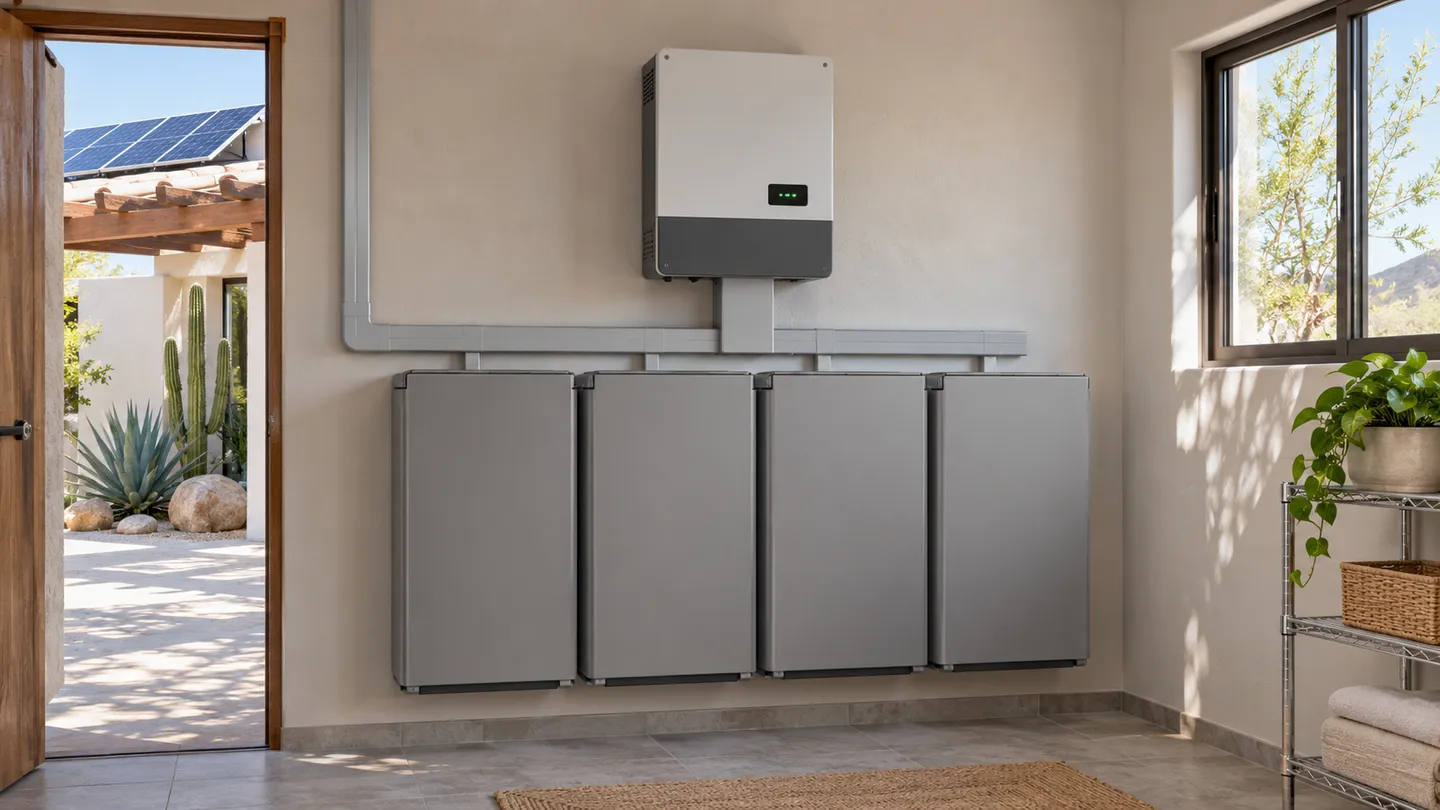
Batteries are the most important —and most expensive— part of an off-grid system. Undersize them and the house shuts down at 3 a.m.; oversize them and you pay for capacity you will never use. Here is how to size them properly.
Step 1: measure daily consumption
Add up each appliance: power (kW) × hours of use. In Los Cabos the big loads are mini-splits, pool pumps, refrigerators, water pumps and electric water heaters.
Step 2: choose days of autonomy
This is how long the home must run on batteries alone. In Baja Sur, thanks to high solar radiation, 1 to 2 days is usually enough as long as there is an automatic generator for rare multi-day tropical storms.
Step 3: apply the formula
Example: 3-bedroom home in Cabo San Lucas
| Item | Value |
|---|---|
| Estimated daily consumption | 30 kWh/day |
| Days of autonomy | 1.5 |
| Depth of discharge | 0.9 |
| Required capacity | 30 × 1.5 ÷ 0.9 ≈ 50 kWh |
Add a temperature margin: in summer, equipment rooms in Cabo easily exceed 35 °C (95 °F), and heat shortens lithium life. That is why we recommend ventilated or conditioned spaces.
LiFePO4 lithium vs lead-acid
| Feature | LiFePO4 lithium | Lead-acid |
|---|---|---|
| Usable depth of discharge | ≈ 90% | ≈ 50% |
| Typical cycle life | 4,000 – 6,000+ | 500 – 1,200 |
| Maintenance | Virtually none | Water checks and ventilation |
| Heat tolerance | Good with thermal management | Degrades quickly |
Common mistakes
- Sizing with nominal instead of usable capacity.
- Ignoring the surge power of pumps and compressors.
- Installing batteries in the sun or unventilated spaces.
- Not planning for future loads (pool, EV charger).
Want us to size your battery bank? Book a technical consultation or explore our off-grid solar systems in Cabo.
Frequently asked questions
How many batteries do I need for an off-grid home?
expand_more
Multiply daily consumption in kWh by days of autonomy and divide by 0.9 (lithium depth of discharge). For example, 30 kWh/day × 1.5 days ÷ 0.9 ≈ 50 kWh of batteries.
How long do lithium solar batteries last?
expand_more
Quality LiFePO4 batteries typically deliver 4,000 to 6,000+ cycles, which equals more than 10 years of daily use when kept within a proper temperature range.
Can I expand my battery bank later?
expand_more
Usually yes, if the inverter and battery system are modular. It is best to plan for it in the initial design, leaving space and wiring ready.
Planning an off-grid solar system in Cabo?
Get a technical design sized to your real consumption, hurricanes and salt air.
Request a consultationarrow_forward